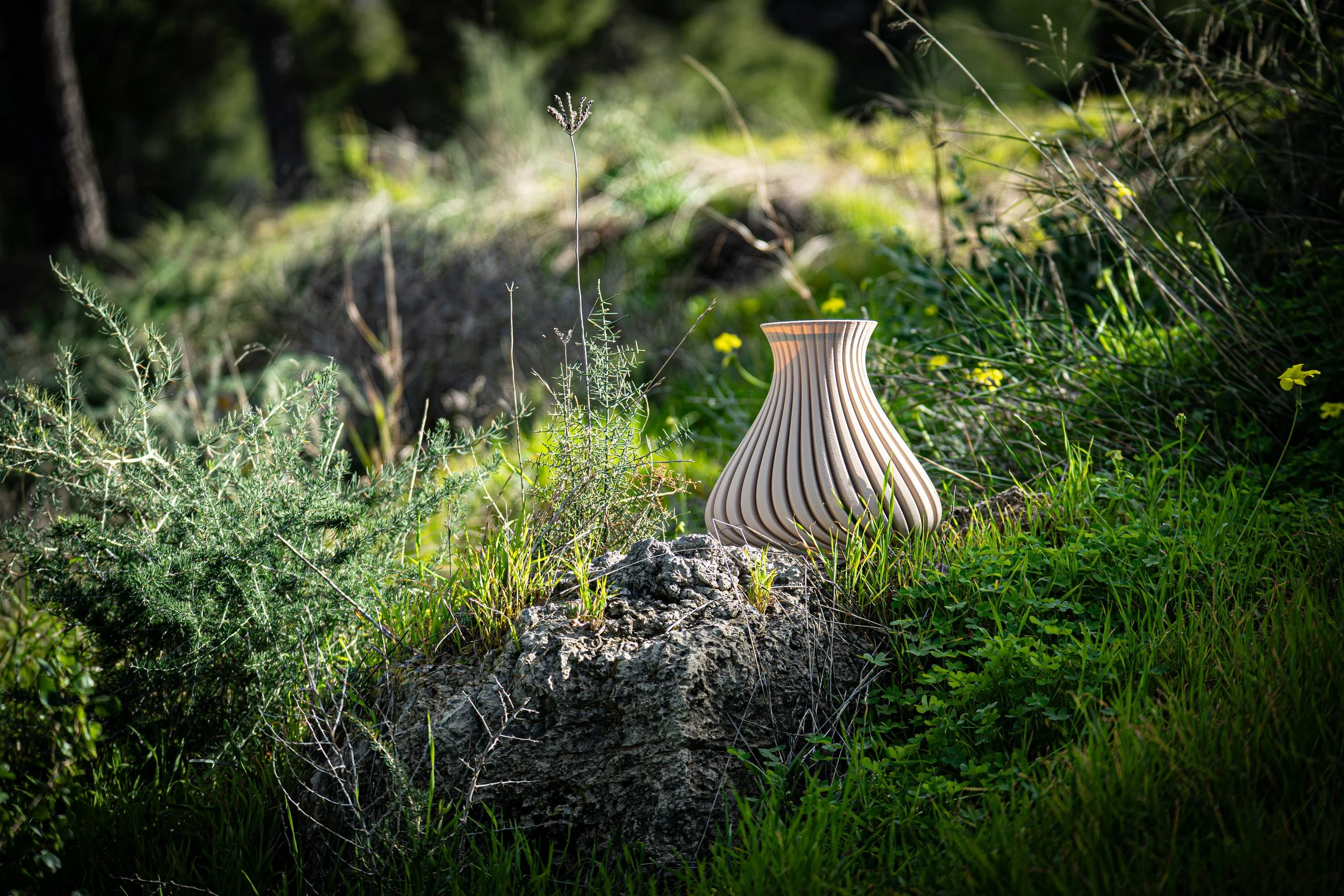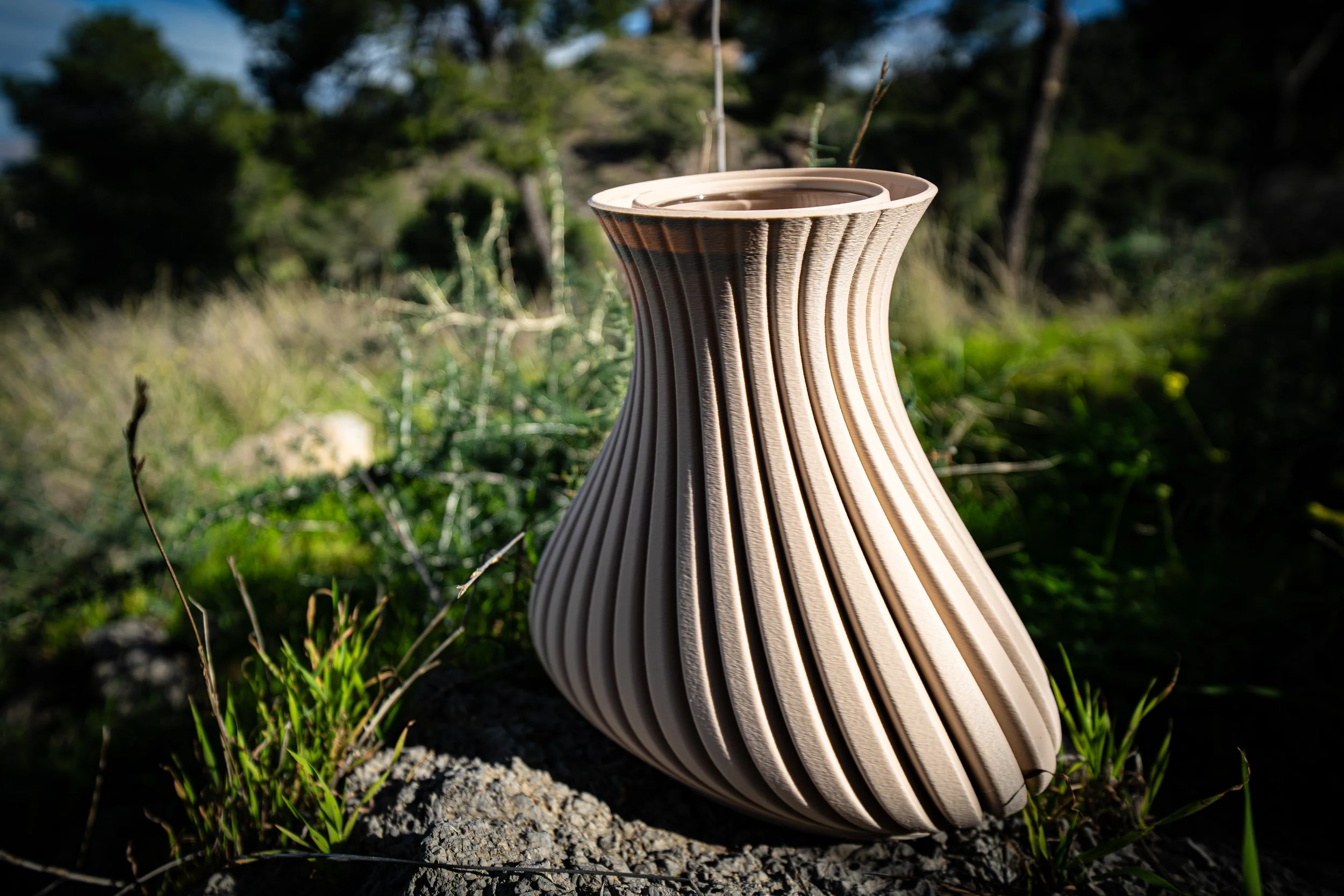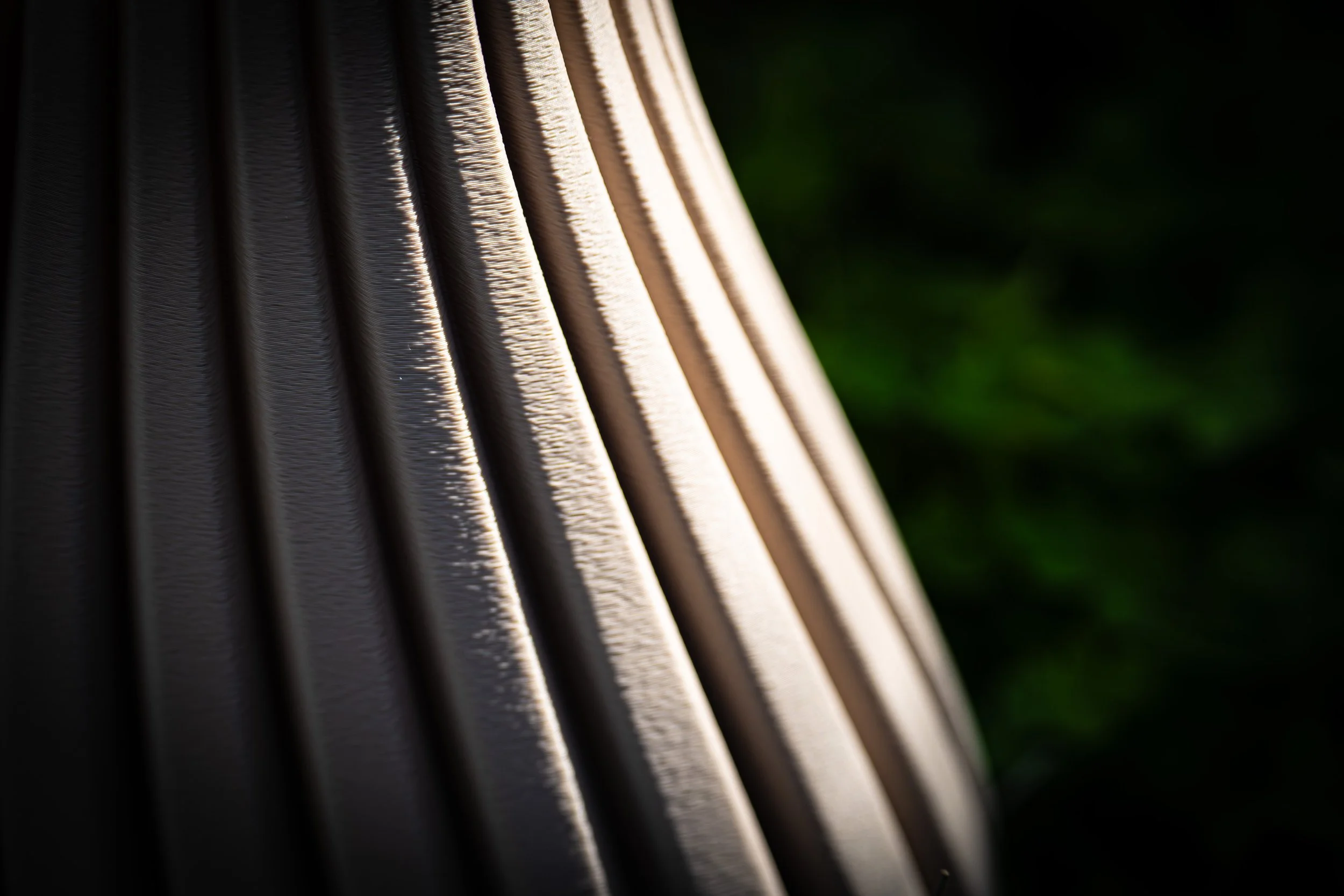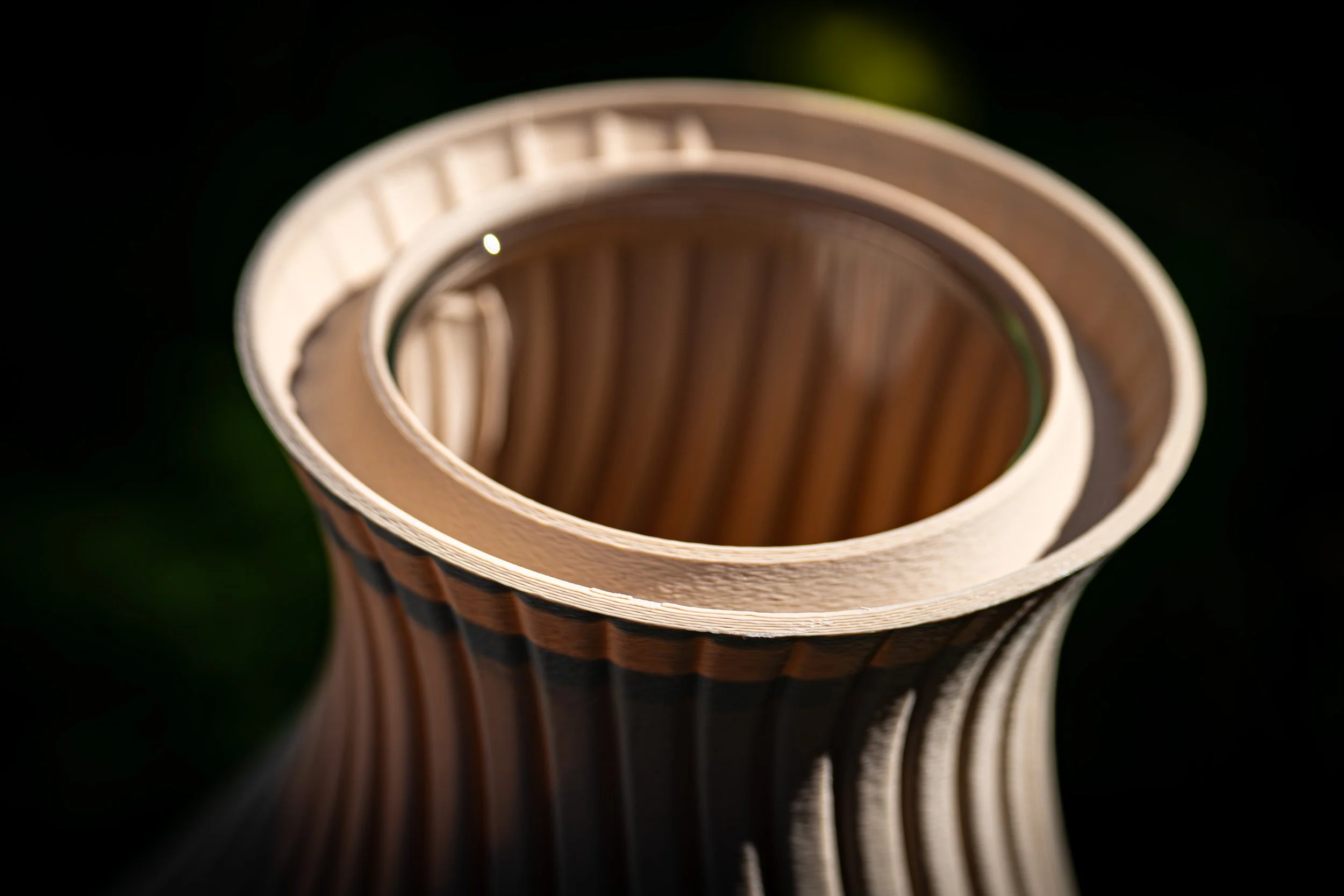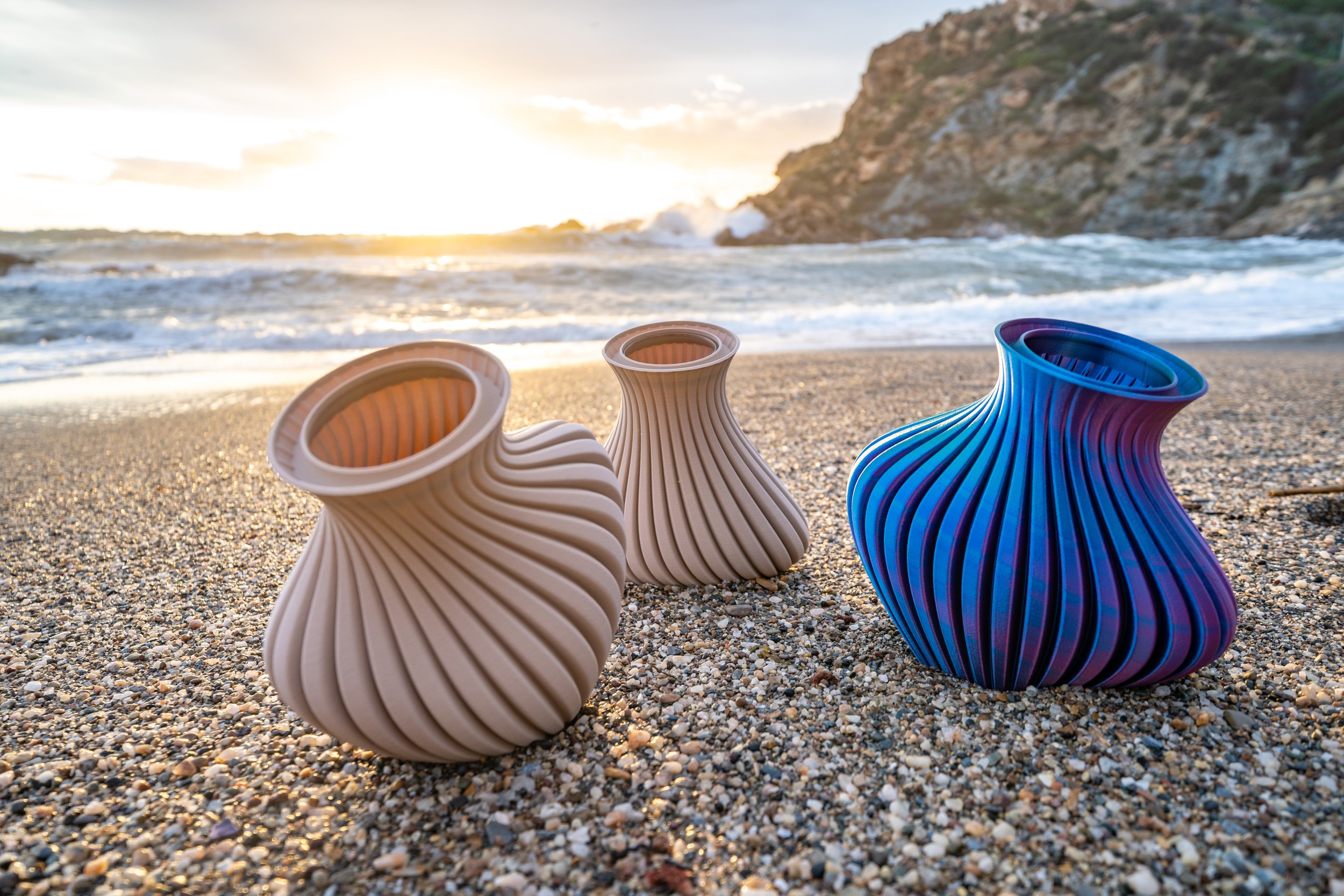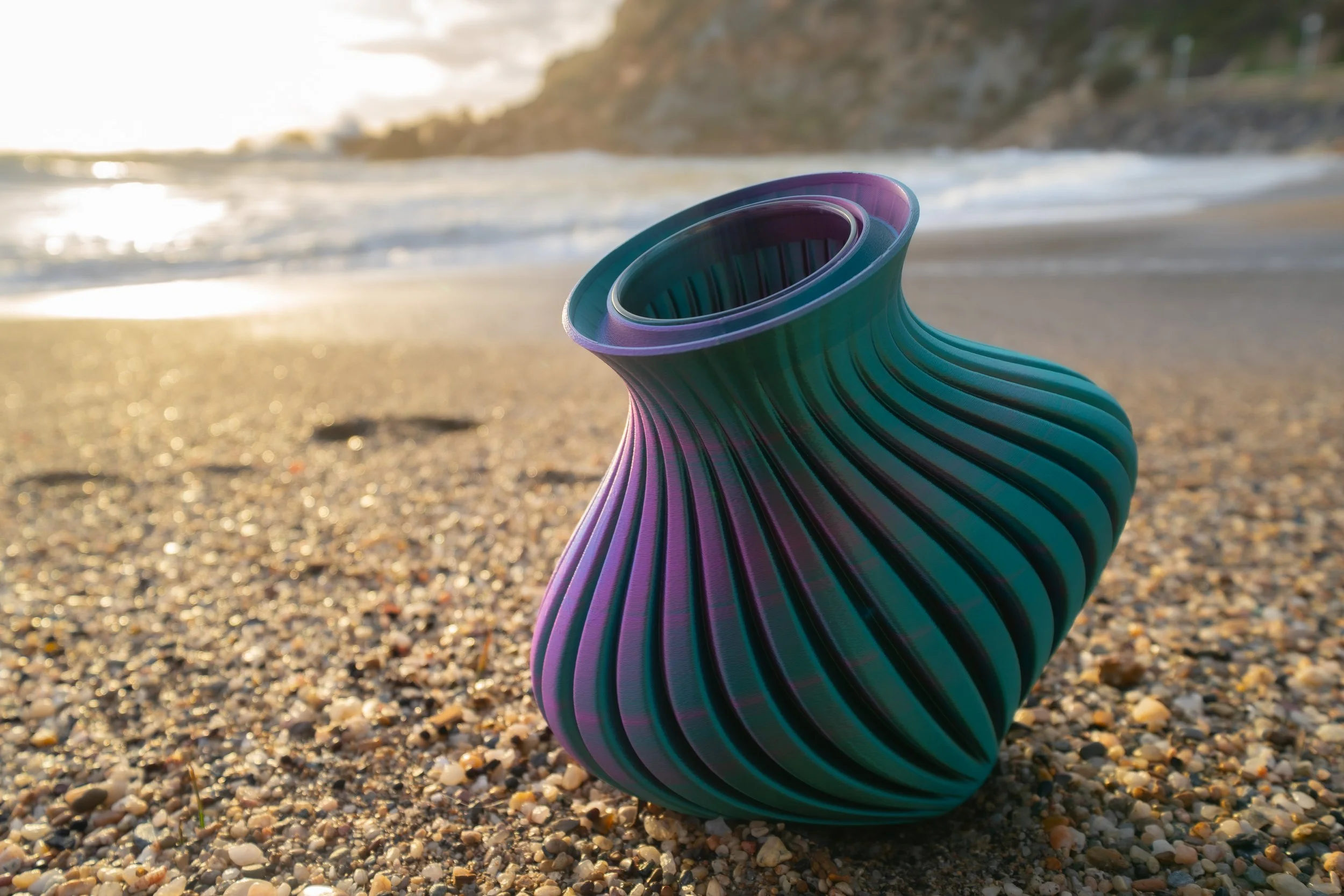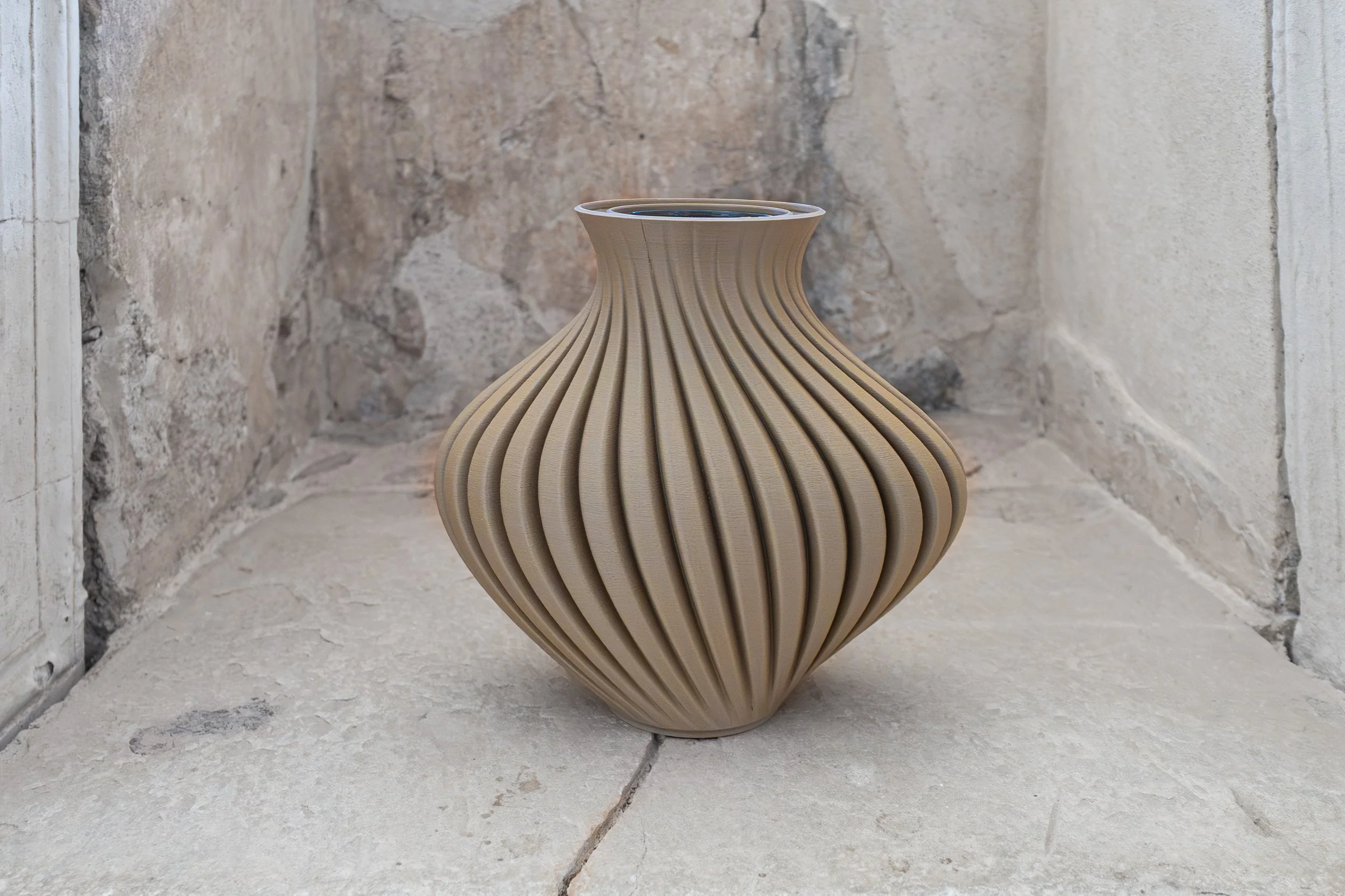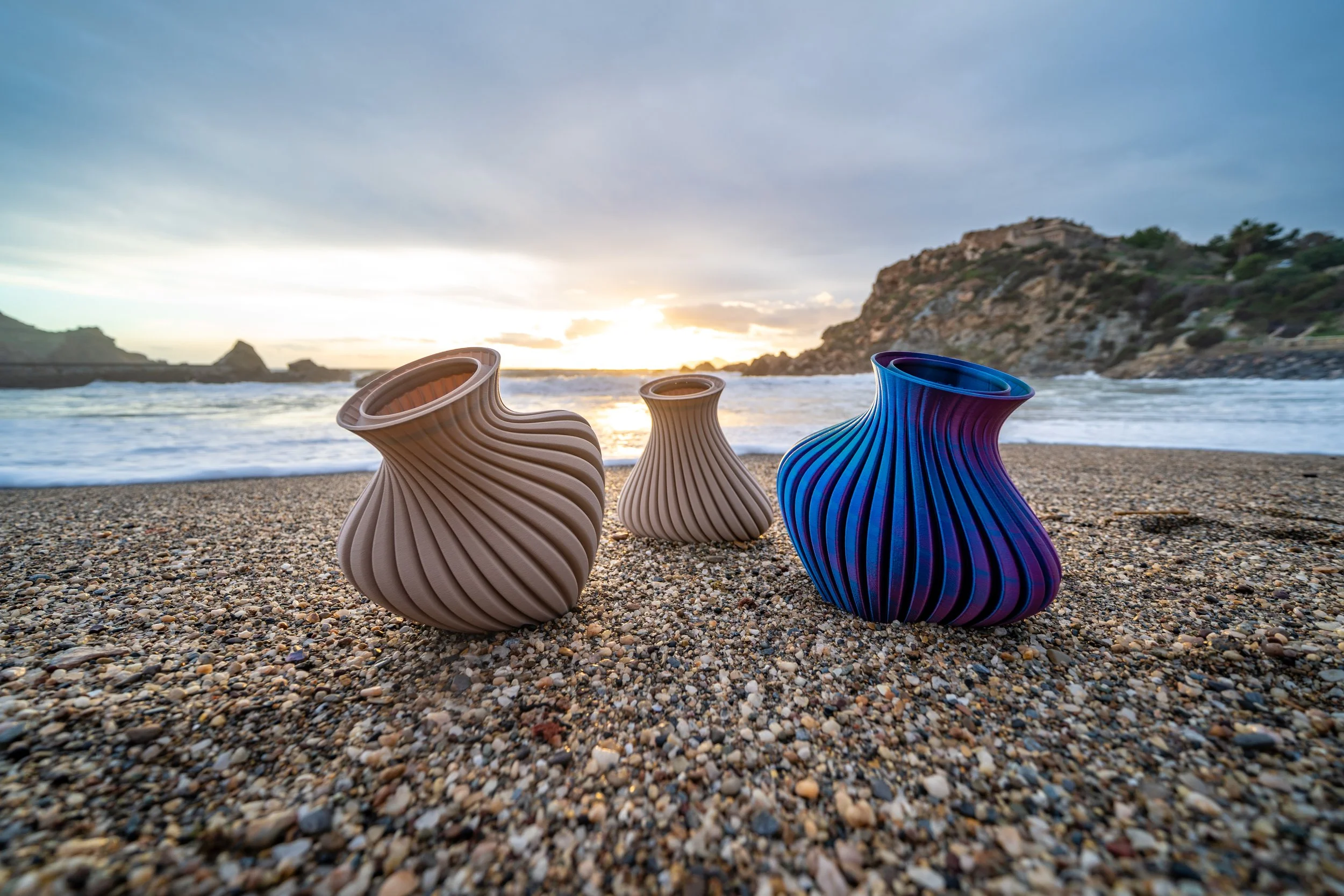
The iBera collection
Modern 3d printed vases inspired by ancient Hispanic craftsmanship
Redefining 3D Printing Through Hispanic Identity
The Ibera collection was born from my memories of southern Spain. The cities and landscapes of this region are shaped by centuries of cultural layering, with different civilisations leaving their marks on architecture and urban fabric. Anyone who has travelled along Spain’s Mediterranean coast will remember its small towns, organic historic urban layouts, narrow streets, ceramic-tiled roofs, and white or stone façades. Over time, these regions have been influenced by Iberians, Romans, Visigoths, Muslims, and later Christian kingdoms. The local craftsmanship and the enduring presence of its vernacular architecture remind us that places are never owned by a single culture for long. Cultural identity is dynamic, constantly evolving, and design influences have always changed and will continue to change over the centuries. Craft traditions transform with each generation and with every civilisation that passes through a place.
When the Object Fades, the Idea Remains
If you purchase one of the iBera prints and wonder whether future archaeologists might one day discover it in an abandoned settlement, warehouse, or wasteland and use it to date a design era, rest assured, this will not happen. If we as designers, and you, as a consumer, have done our job well, no one should find traces of 3D-printing waste in forgotten places thousands of years from now. That is why I work exclusively with 100% recyclable and biodegradable materials, designed to disappear naturally over time. Designers today should aim to create objects that leave meaning, not waste, unless they are intentionally made to be preserved in a museum.

Inspired by ancient craftmanship
As a designer, I have always been inspired by archaeology. From an early age, I enjoyed visiting museums and exploring archaeological sites with my family. The forms created by ancient craftspeople continue to fascinate me, especially pottery and decorative arts. The ornaments found on Iberian and Roman ceramics are particularly striking, with their careful attention to surface detail and decoration. Even today, fragments of these objects can still be found in certain settlements. A simple walk through historic landscapes may reveal ceramic remains that allow archaeologists to date a site and better understand the cultures that once inhabited it.
Designed just for you
That said, at 3DTOX we create designs meant to last at least a generation. Our Mediterranean-inspired 3D prints blend craftsmanship with advanced fabrication techniques, allowing you to create unique and expressive spaces, whether at home, in the office, or in a retail environment.